ValuBot is live!
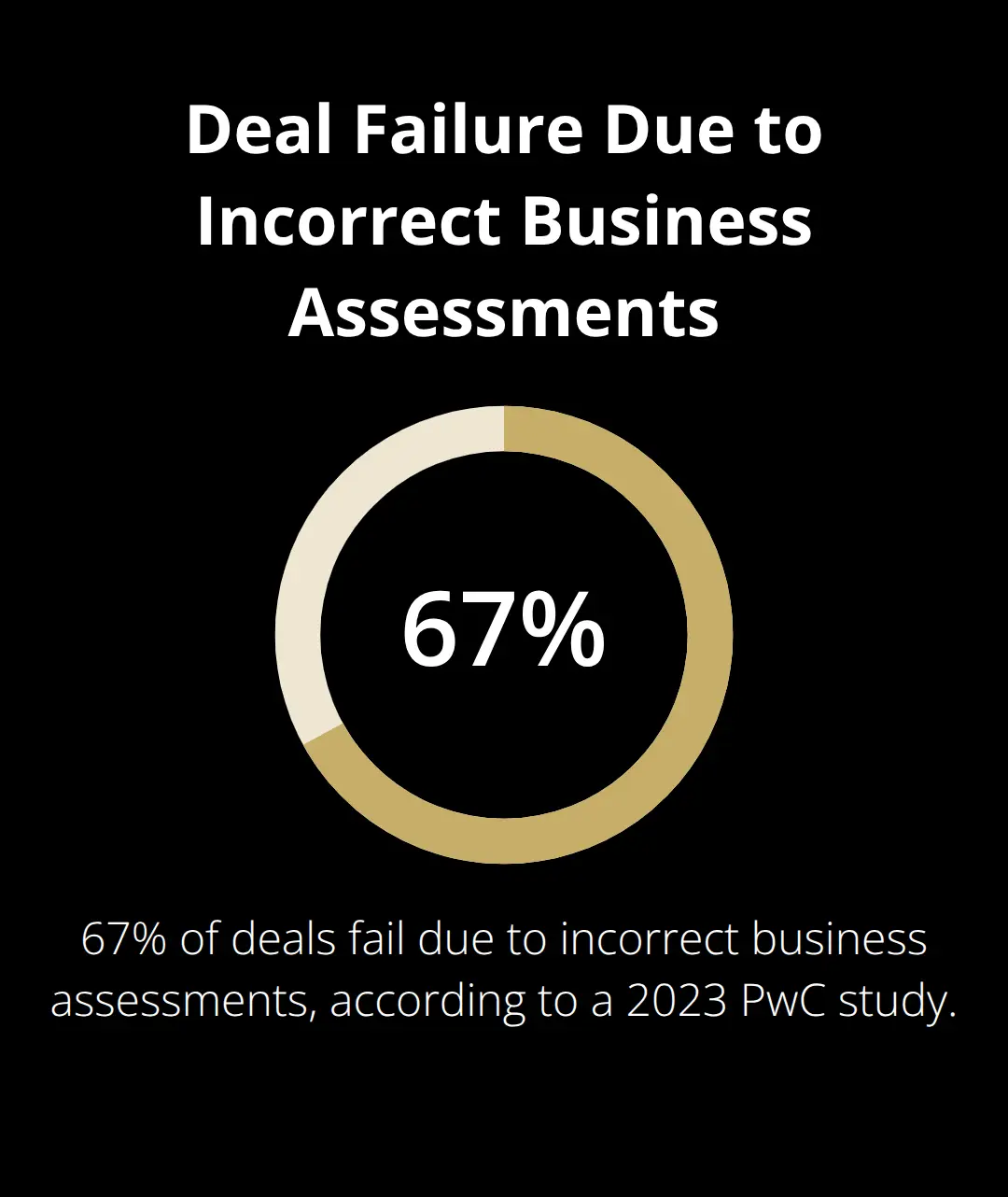
Business owners routinely lose millions during exits because of preventable valuation mistakes. A 2023 PwC study found that 67% of deals fail due to incorrect business assessments.
We at Unbroker see these errors destroy value daily. The most expensive mistakes happen when owners skip professional guidance and rely on outdated methods or incomplete financial analysis.
What Valuation Methods Are Destroying Your Deal Value
Outdated Data That Kills Buyer Interest
Stale financial data kills deals faster than any other valuation error. Companies that present financial statements older than six months face reduced buyer interest as market conditions shift rapidly. Market comparables from 2022 hold no relevance in today’s economy where interest rates have risen significantly from historic lows. Software companies valued with pre-AI multiples lose 30-40% of their actual worth because outdated benchmarks ignore current technological shifts that reshape entire industries.
Industry Multiples That Miss the Mark
Generic P/E ratios destroy manufacturing valuations while SaaS companies need ARR multiples, not traditional revenue metrics. Healthcare practices require patient-based valuations that account for recurring revenue streams and regulatory compliance costs. Construction firms demand backlog analysis over simple asset multiples (especially in volatile material markets). Restaurant chains need same-store sales growth metrics rather than location counts. The Exit Planning Institute found that 78% of failed sales used wrong industry benchmarks that ignored sector-specific value drivers.
Hidden Assets Worth Millions
Customer databases, proprietary software, and brand recognition account for 60% of modern business value yet most owners ignore these assets completely. A marketing agency’s client contracts and creative processes often outweigh physical assets by 10-to-1 ratios. Manufacturing patents, trade secrets, and supplier relationships represent massive hidden value that traditional methods overlook. Professional service firms lose millions when they ignore non-compete agreements and staff retention systems (particularly in talent-scarce markets). Technology companies undervalue their code repositories, user data, and algorithm improvements that required years to develop.
These valuation method errors pale compared to the financial oversights that follow. Poor earnings analysis and cash flow mistakes create even larger gaps between perceived and actual business value.
Why Clean Financial Records Make or Break Your Sale
Normalized Earnings Reveal True Business Value
Business owners who fail to normalize earnings lose significant company value because buyers cannot identify true profitability. Raw financial statements hide the real earning power when personal expenses, one-time costs, and owner benefits inflate operating expenses. A restaurant owner who runs family meals through business accounts or pays personal car payments creates artificially low profit margins that scare away serious buyers. Manufacturing companies that expense major equipment purchases instead of capitalizing them show depressed earnings that undervalue the business significantly. The Exit Planning Institute reports that small business owners’ net worth is tied up in their business by more than 90%.

Working Capital Requirements Create Deal-Breaking Surprises
Most sellers ignore working capital requirements and face last-minute purchase price reductions that destroy deals. Seasonal businesses need three to six months of operating cash to handle revenue fluctuations, yet owners rarely calculate these needs accurately. Construction companies require substantial cash reserves for material purchases and payroll between project payments (creating working capital needs that can reach 30% of annual revenue). Service businesses with 60-day payment terms need enough cash to cover two months of expenses while waiting for collections. Professional valuators consistently find that inadequate working capital planning creates significant pricing challenges because buyers demand cash adjustments at closing.
Capital Expenditure Planning Destroys Future Value
Deferred maintenance and equipment replacement needs create massive valuation gaps that surface during due diligence. Manufacturing facilities that delay machinery upgrades face buyer discounts of $2-4 for every $1 of deferred capital spending. Technology companies that run outdated servers and software infrastructure lose buyer confidence when systems cannot scale for growth. Retail locations with aging HVAC systems, worn flooring, or outdated point-of-sale equipment require immediate buyer investment that reduces purchase offers (sometimes by hundreds of thousands of dollars). Professional appraisers emphasize that businesses with comprehensive capital expenditure forecasts perform better in valuations than those without proper planning.
These financial oversights compound when owners misread market conditions and time their exits poorly. Market timing mistakes can multiply valuation errors and destroy even well-prepared businesses.
When Market Timing Destroys Business Value
Economic Indicators Signal Valuation Disasters
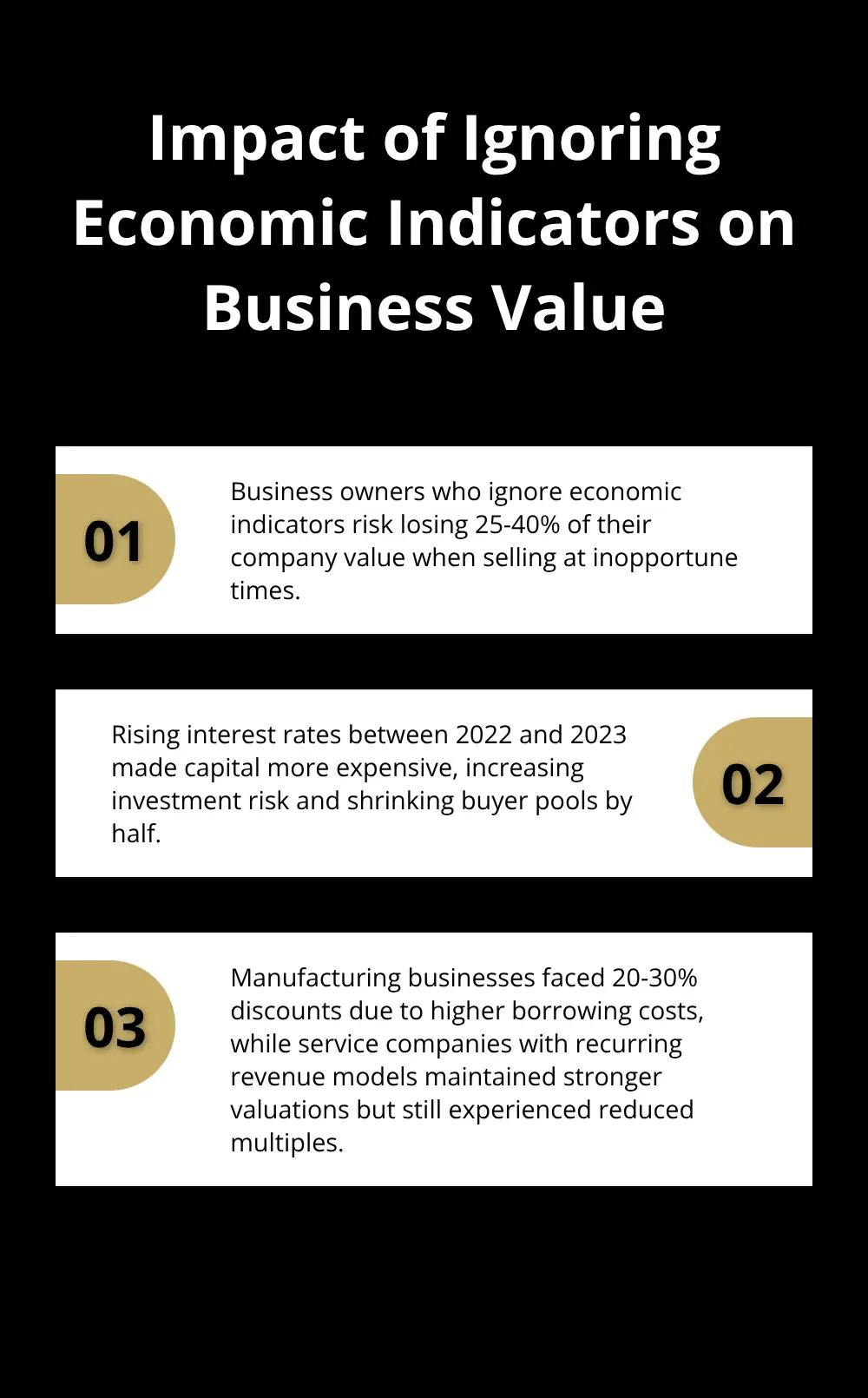
Business owners who ignore economic indicators lose 25-40% of their company value when they sell at the worst possible times. The Federal Reserve raised interest rates significantly between 2022 and 2023, which made the cost of capital more expensive and increased investment risk. Companies that rushed to market during this period faced buyer pools that shrank by half and financing costs that made deals impossible to close. Manufacturing businesses particularly suffered as equipment financing became prohibitively expensive and buyers demanded 20-30% discounts to compensate for higher borrowing costs. Service companies with recurring revenue models maintained stronger valuations but still faced reduced multiples as private equity firms became more selective with capital deployment.
Competitive Analysis Gaps Create Market Blindness
Most sellers enter the market without understanding their competitive landscape and face devastating surprises during buyer due diligence. Restaurant owners who ignore franchise competition in their market area lose negotiating power when buyers identify better-positioned alternatives with lower startup costs. Technology companies that fail to research recent acquisitions in their sector miss pricing benchmarks and accept offers 40-50% below market rates. Businesses that conduct comprehensive competitive analysis before listing understand the value gap between their current and required exit value, which is crucial for setting goals and strategic planning. Professional service firms that ignore industry consolidation trends particularly suffer when larger competitors acquire similar businesses at premium multiples while they settle for distressed sale prices.
Buyer Research Prevents Transaction Failures
Inadequate buyer research creates mismatched expectations that destroy deals during final negotiations. Sellers who target strategic buyers without understanding their acquisition criteria waste months pursuing deals that never close. Private equity firms have specific requirements including revenue stability, EBITDA margins, cash flow health, and debt-to-equity ratios that eliminate most potential targets before initial conversations begin. Individual buyers often lack financing capacity or operational experience needed to complete transactions successfully. Smart sellers research buyer transaction history, financial capacity, and strategic fit before they engage in serious discussions to avoid wasted time and damaged market perception.
Final Thoughts
These valuation mistakes cost business owners millions in lost value every year. Outdated financial data, wrong industry multiples, and ignored intangible assets destroy deal potential before negotiations begin. Poor earnings normalization, inadequate working capital plans, and deferred capital expenditure needs create buyer discounts that devastate final sale prices.
Market timing errors and insufficient competitive research compound these problems and eliminate qualified buyers from consideration. Smart business owners avoid these pitfalls by maintaining current financial records, understanding their industry benchmarks, and cataloging all valuable assets. Professional valuators certified by ASA, AICPA, or NACVA provide accurate assessments that withstand buyer scrutiny and legal challenges (particularly during complex negotiations).
We at Unbroker help business owners navigate these complex valuation challenges through our transparent platform that connects sellers with qualified buyers. Our Full Service and Assisted Business Sale options provide comprehensive support throughout the process. Professional guidance eliminates traditional brokerage fees while delivering expert assistance with legal templates and negotiation support.




![Why Your Business Sale Is Taking Forever [Common Delays Explained]](https://v6d0bbyc8ns.c.updraftclone.com/wp-content/uploads/emplibot/sale-timeline-hero-1765519819.webp)



![Beyond Traditional Brokers [Your Complete Guide to Modern Options]](https://v6d0bbyc8ns.c.updraftclone.com/wp-content/uploads/emplibot/broker-alternatives-hero-1765174159.webp)